Blog

Blog

Read the latest from the Fairchild Tropical Botanic Garden blog.

Petite, Attractive and Delicious: the Persimmon in South Florida

When we think of gardening in South Florida, the persimmon is probably not what comes to mind. But, perhaps it should be. As long as one pays close attention to variety selection and the source, the persimmon can be a rewarding home garden choice even in a South Florida faced with global climate change. ..
Read More »

Passion Fruit

Passion fruit, Passiflora edulis, is definitely a showstopper when it comes to tropical plants, and its aromatic fruit and beautiful flowers will ignite your horticultural passion. The passion fruit, unlike most tropical fruits, is not a tree but instead a climbing vine. This vine is multifunctional, providing fruit and habitat for some of South Florida’s most handsome butterflies, including the Zebra Longwing, Heliconius charitonius….

Read More »

Paradise Found

As Published in the Miami Herald What if you walked out of your back door and into paradise? What if you were surrounded by stately palms, delicious colors, extraordinary textures and striking shapes? Imagine your backyard as more than just a space – picture Eden without the apples. Creating your own slice of tropical heaven is an attainable goal in South Florida. Our unique location makes it possible to grow countless varieties of beautiful yet durable flora. It's a matter of…

Read More »

Palms that break the rules

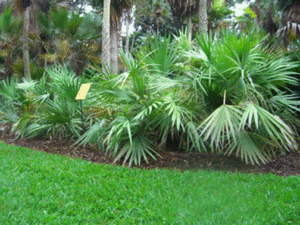
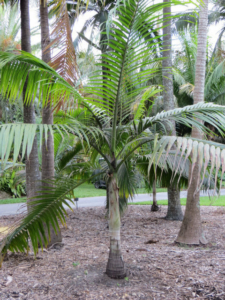
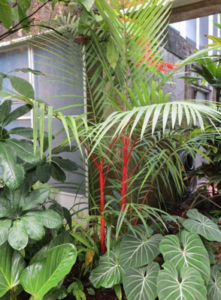
Most plant lovers are knowledgeable about palm habit. It is uniform — a trunk with one crown of green, folded leaves and flowers borne below or within the crown. This most common growth habit gives the best support, with the greatest chance of survival for a majority of palm species.

Read More »

Palms are more than Ornamentals

As published in the Miami Herald Many Floridians love palms because of their beauty and elegance, their capacity to grow fantastically in our South Florida climate and their ability to conjure images of island living. Some Floridians use the impressive royal palm for shade; others use the areca palm as a barrier; while many more plant the saw palmetto for its willingness to grow in any soil. For all of these reasons and more, palm trees make truly remarkable landscape ornamentals. But, there …

Read More »

Palms and their extreme ways of adapting

As published in The Miami Herald Summer in Miami is not for the faint of heart. If the humidity does not make you weary, the mosquitoes definitely will. South Florida natives are tough but through air conditioning, bug spray and sunscreen, we have adapted to living in a sometimes harsh sub-tropical climate. While we have changed our environment, palms adapt to stressful conditions by reacting to the environment and changing their growth habits. Palms live on every continent, except …

Read More »

Orchidology: for serious collectors

Orchid cells have been to the International Space Station. Vandrame. Wagner Vandrame, associate professor of Environmental Horticulture with the University of Florida’s Tropical Research and Education Center in Homestead, sent orchid tissue to the Space Station in 2007, and found that without gravity they do indeed grow faster than in our backyards. The experiment is part of a larger effort aimed at finding the best way to grow and conserve orchids threatened in the wild. Vandrame hosted…

Read More »

Orchid Hunting in the Andes

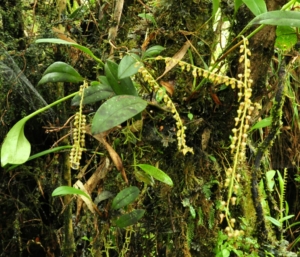
Crossing the Andes, we find Puya clava-herculis in bloom at the highest elevations, their aquamarine flowers the same color as those of the jade vine. Now the hunt to find and photograph orchids becomes the obsession of the day — but Marie and Steve Nock, who are our travel companions, are searching for aroids as well. Puya clava-herculis Sobralia rosea lifts large lavender and rose flowers everywhere we look. A terrestrial Habenaria species shows off little white flowers surrounding an …

Read More »

Native plants can be the solution for difficult garden location

Let’s see what we can do with a small, inhospitable plot of land. I have in mind an area in my front yard, about four feet deep tapering to about two feet. It runs north-south, is about seven feet wide and backs up against the house. It’s rocky, gets brutal summer sun and intense rain, including runoff from my roof. In other words, the worst that South Florida weather can throw at it.

Read More »

Growing a Mango Tree in Florida: What’s the Best Backyard Mango?

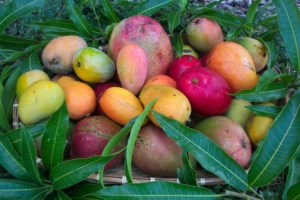
 South Florida is one of the few mainland areas of the United States in which the delicious and fragrant mango can be properly grown. For years they have been of great value in South Florida. Grown with pride in the garden, they are eaten as fruit when ripe and as a vegetable when green. Nothing compares to the delicacy of a fresh Cogshall or Rosigold mango harvested directly from the tree. Today we are privileged to have mango varieties with superior …

Read More »

Mangos in Punaluu

By Noris Ledesma

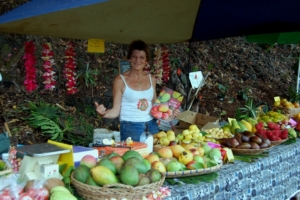
Before going to Kona, we stopped by the fruit market in Hilo. Ginger flowers and all manner of greens dominated the market. They had some of the local mangos which I was happy to find, along with fresh rambutans and mangostens. It was a nice place for breads and local jellies. We purchased some breads, fruits, green papaya salad and coffee for our trip. We drove over the mountains along the south coast and up slopes of the island's volcano. This lovely formation is part of the Hawaii…

Read More »

Mango Season – Just Satisfying!

As published in the Miami Herald With mango season here, we are all thinking about that age-old question: how to deal with all those glorious, delicious-and ripe-mangos. There is the only one mainland area of the United States where this delicious and fragrant fruit can be properly grown. For years mangos have been of great value in South Florida, grown with pride in the garden – a fruit to eat when ripe and at all stages of growth. Fresh mangos are a privilege Floridians have….

Read More »

How to Grow Cacao Trees: Making Cacao Growing a Piece of Cake

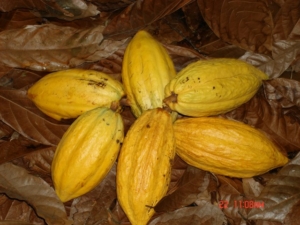
Chocolate really does grow on trees; although not as little chocolates wrapped up in foil. Chocolate comes from the seeds of the understory tree Theobroma cacao, a tropical rainforest species closely intertwined with the needs of mankind. Cocoa cultivation began in the Americas by the hands of the Maya in Central America, ca. 1500 BC. The Maya attributed divine origin to cocoa, being brought down from heaven by their God Quetzacoatl. The cocoa beans were so precious in fact that they were used as a currency…

Read More »

Loquat

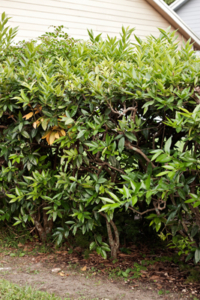
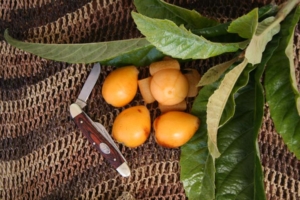
The loquat (Eriobotrya japonica) is a fruit of our South Florida childhood that has nearly disappeared – all due to a little fly no bigger than a pea. South Florida children would spend many a winter or spring afternoon up a loquat tree, harvesting and eating their way to contentment. For the homemaker the loquat also provided the makings for many a pie and preserve…. 

Read More »

Make your backyard a wildlife habitat

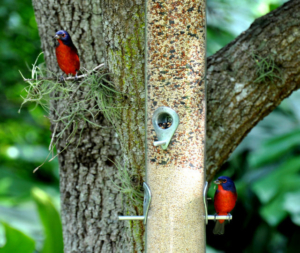
As published in the Miami Herald Imagine sitting in your backyard as colorful birds chirp and flit about and bountiful butterflies scout blooms for nectar. With the right plan and the right plants, you can make your backyard into a wildlife habitat that will attract amazing birds and beautiful butterflies. Birds like berries and insects, so choose a variety of plants that will both produce berries and be home to small insects that birds like to eat. Native plants are always a good choice …

Read More »

Loofah: Grow Your Own Sponges

As published in the Miami Herald You may know the loofah as a bath sponge, but did you know it can be grown in South Florida? The fibers of the dried loofah fruit stiffen and hold together to form nature's perfect sponge, which is used to gently exfoliate your skin. Immature fruit can be cooked and eaten as squash or substituted for cucumber in salads. The species most adapted to South Florida are Luffa cylindrica and Luffa aegyptiaca. Both species have oblong fruits and are beautiful …

Read More »

Living and Mulching in Three-quarter Time

It is time to face facts. Our soils are shallow and made up of mostly nutrient poor rock or sand. We have a monsoonal climate with a rainy summer and dry winter; summers bring the threat of tropical cyclones and winters, the occasional killing frost. But remember it is paradise, if you change your stride and garden to a slightly different beat – mulching….

Read More »

FOLLOW THE LATEST @fairchildgarden